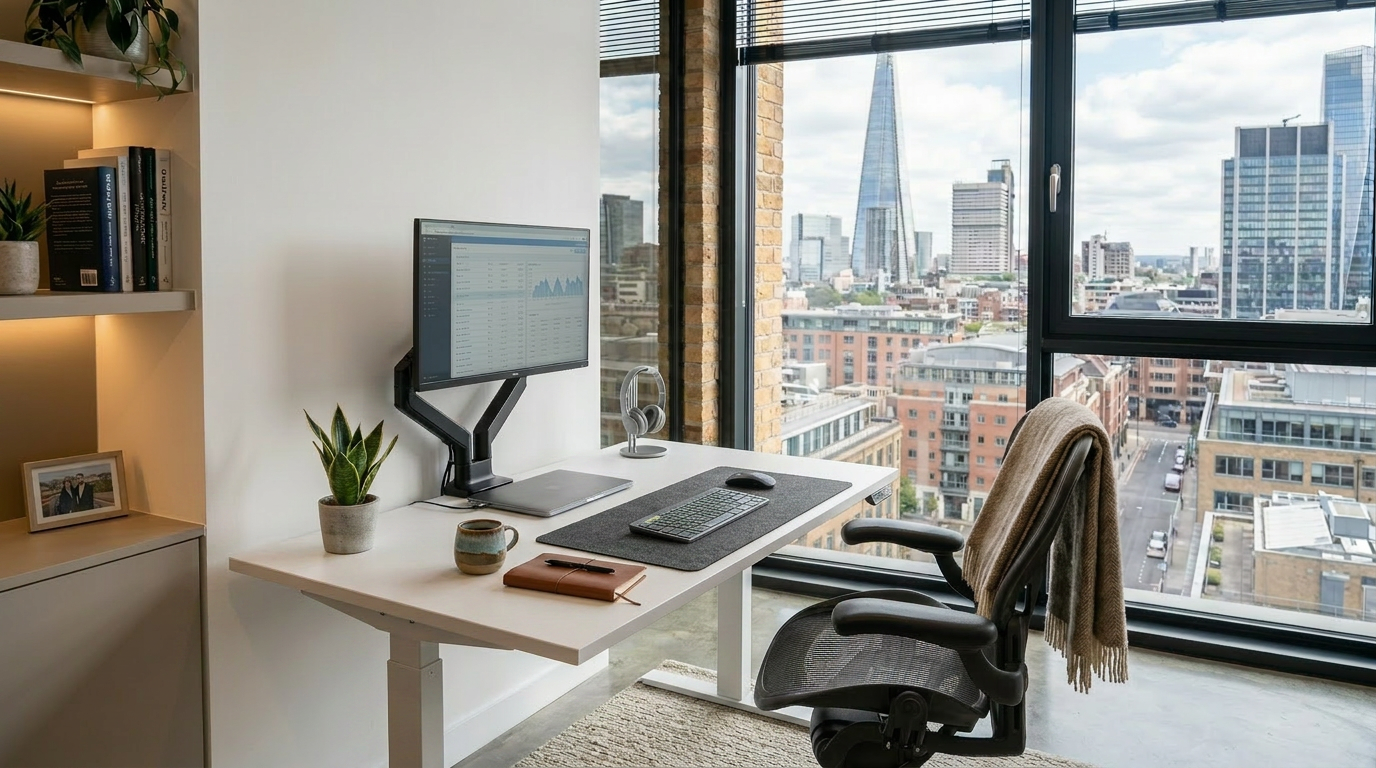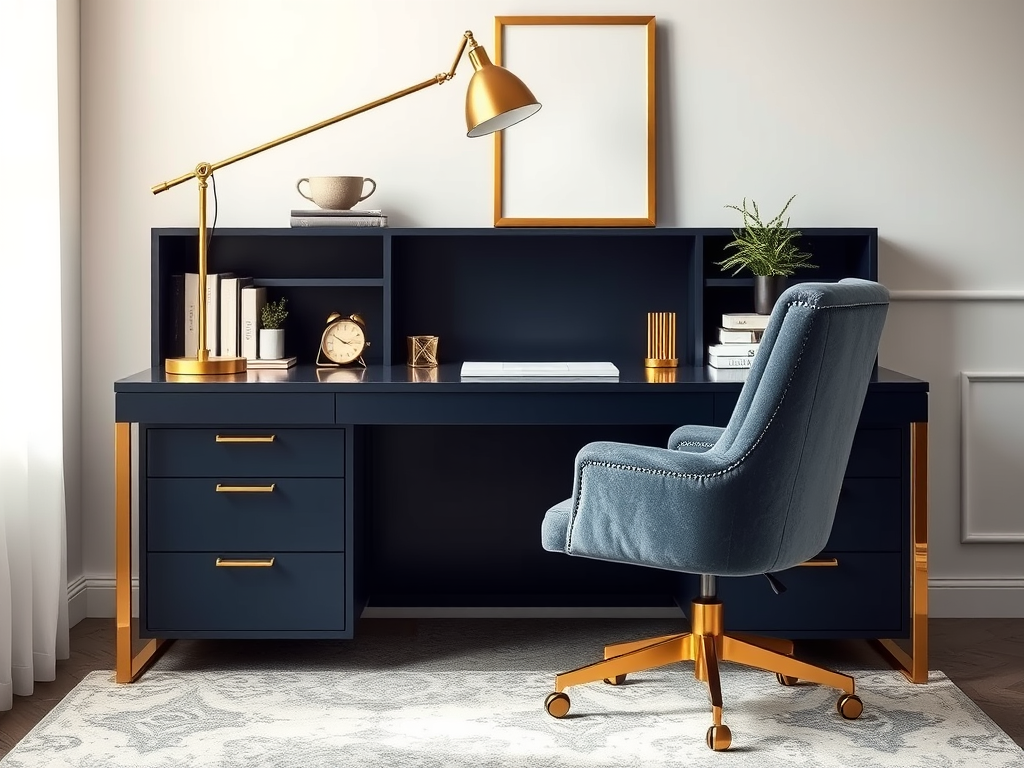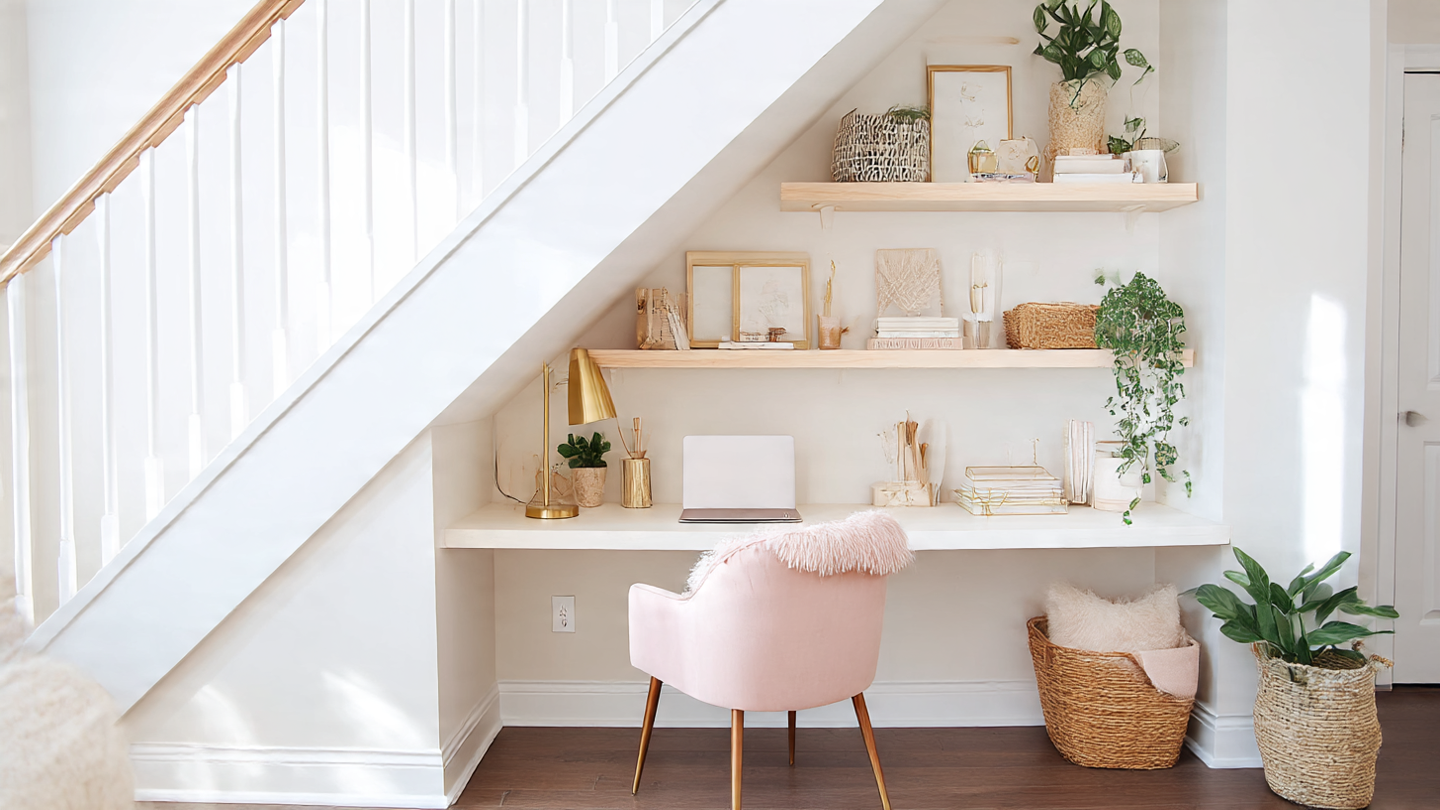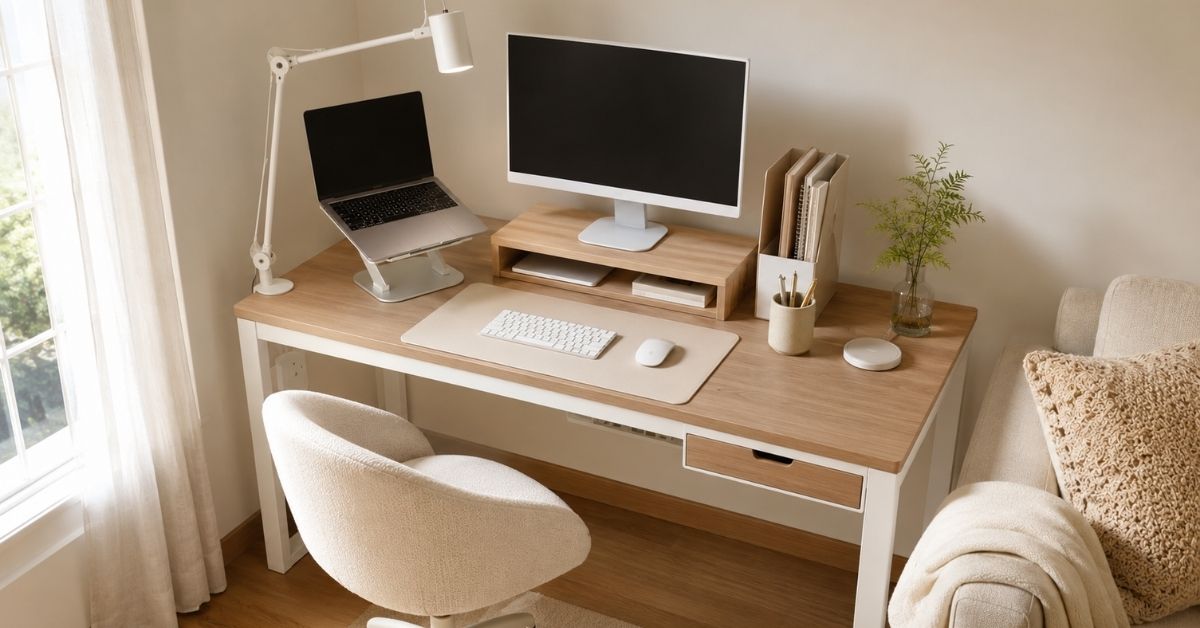
A minimalist work desk is not about working at an empty table with nothing around you. It is about creating a workspace where everything has a purpose, your everyday essentials are easy to reach, and unnecessary clutter is kept out of sight.
That can make a noticeable difference when your home office is tucked into a bedroom, living room or small apartment corner. With less visual noise, the space can feel calmer and more intentional—even when you do not have room for a full-size office.
The best minimalist work desk setups are also realistic. You still need a computer, lighting, charging cables, notebooks and office supplies. The goal is to choose streamlined pieces and create simple systems that keep those necessities from taking over the desk.
Here are nine ways to create a minimalist work desk setup that looks beautiful, works efficiently and fits comfortably into a small space.
This post contains affiliate links through Amazon. As an Amazon Associate, I earn from qualifying purchases at no extra cost to you.
Want an Easier Way to Build the Look?
Curated Collection
See The Minimalist Work Desk Edit
I collected my favorite compact desk essentials, organization tools and neutral accessories in one easy-to-browse list.
Shop the Full Collection →(paid link)
What Does a Minimalist Work Desk Really Need?
Before buying anything new, think about what you actually use during a normal workday.
For most people, the essential setup is surprisingly simple:
- A desk that fits the available space
- A comfortable chair
- A laptop or monitor
- A keyboard and mouse, if needed
- Focused task lighting
- A place to store small supplies
- A simple way to control cables
Everything else should either make your work easier or make the space more pleasant without creating clutter.
A minimalist workspace does not have to be completely white, perfectly bare or without personality. Warm wood, soft neutral colors, a small plant and one or two decorative details can keep it from feeling cold. What matters most is that the setup feels visually quiet and easy to maintain.
1. Start With a Desk That Fits the Space
The desk establishes the footprint of your entire workspace. In a small room, an oversized desk can make the area feel crowded before you add a single accessory.
Look for a simple desk with clean lines and enough surface area for the equipment you use every day. A narrow writing desk can work well for a laptop setup, while a slightly deeper desk may be more comfortable if you use a separate monitor and keyboard.
Storage can be helpful, but more drawers are not always better. One shallow drawer is often enough for pens, charging cables and small office supplies. If you prefer an open desk, an under-desk drawer can add hidden storage without changing the streamlined look.
Light wood, warm white and soft taupe desks are especially useful in small spaces because they reflect light and feel less visually heavy. A slim black desk can also work beautifully when the rest of the room has a simple, modern palette.

2. Choose a Calm, Limited Color Palette
One of the easiest ways to create a minimalist desk aesthetic is to limit the number of colors and finishes in the setup.
Choose one main color, one supporting neutral and one subtle accent. For example:
- Warm white, light oak and muted gold
- Cream, taupe and black
- Soft gray, white and natural wood
- Ivory, walnut and brushed brass
The pieces do not need to match perfectly. They simply need to feel related. A white keyboard, cream desk mat and light-wood monitor stand will usually feel more cohesive than several accessories in unrelated colors.
Texture keeps a neutral office from looking flat. Try combining a smooth desk surface with a soft desk mat, a natural-wood organizer and one small ceramic accessory. This creates warmth while preserving the calm, minimal appearance.
If you like a bright, airy palette, these white desk accessories can help you build a coordinated setup without making the desk feel overly decorated.
3. Raise the Screen and Reclaim the Space Underneath
A monitor that sits directly on the desktop can take up valuable space and encourage small items to collect around its base.
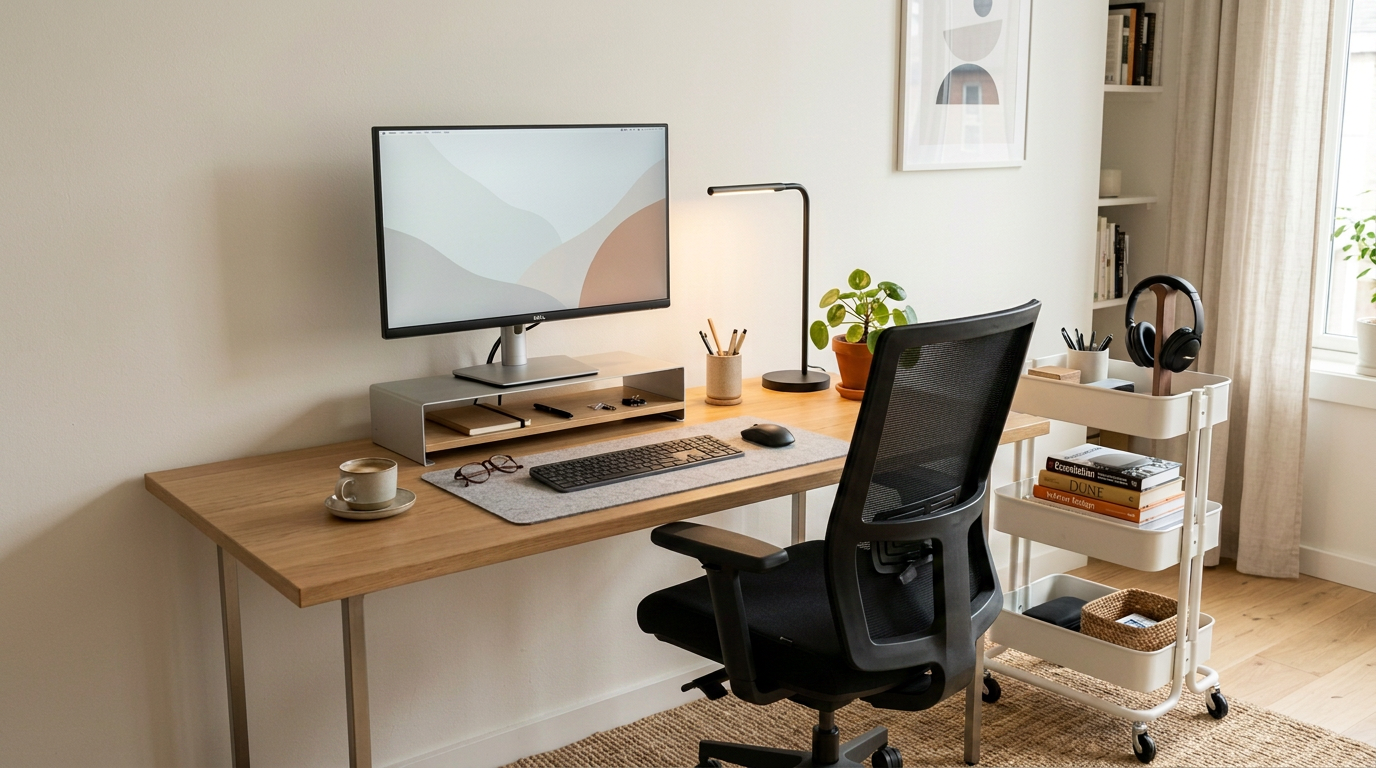
A slim monitor riser lifts the screen while creating a useful storage zone underneath. When the workday ends, you can slide a compact keyboard, notebook or laptop beneath it and immediately clear more of the surface.
Choose a riser that is only slightly wider than your monitor. Open designs usually look lighter than bulky desktop cabinets, while a model with one shallow drawer can help contain small tech accessories.
Screen height matters for comfort too. The top portion of the screen should be near eye level so you are not constantly leaning forward or looking down.

4. Try a Minimalist Laptop-Only Setup
Not every home office needs a full desktop arrangement. If you move between rooms or only have a narrow desk, a laptop-only setup may be the most practical minimalist option.
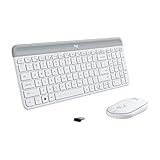
Place the laptop on a slim adjustable stand and pair it with a compact wireless keyboard and mouse. Raising the laptop can make the screen easier to view while freeing a little space beneath it for a notebook or small charging hub.
When possible, choose a foldable stand that can be stored when it is not being used. This is especially helpful when the desk also serves as a vanity, console table or occasional dining surface.
Keep the rest of the setup simple: one lamp, one desk mat and one small container for the supplies you use most often. A laptop workspace does not need to feel temporary just because it is compact.

#ad
5. Hide Cords Before Adding Decor
Visible cables create visual clutter faster than almost anything else on a minimalist work desk.
Start by removing cords that are no longer being used. Then group the remaining cables so they follow the same path toward the outlet instead of crossing the desktop and floor in different directions.
A few inexpensive tools can make a significant difference:
- Cable clips keep charging cords from falling behind the desk
- A cable sleeve gathers several cords into one cleaner line
- An under-desk tray holds a power strip off the floor
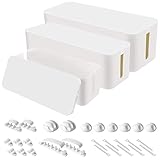
- A cable-management box conceals a power strip and bulky plugs
- Reusable ties shorten excess cord length
Try to position the power source near the back or underside of the desk. The fewer cables you see from the normal viewing angle, the more polished the workspace will feel.

#ad
6. Choose Storage That Visually Disappears
Minimalist desk organization works best when storage holds what you need without becoming the main feature of the workspace.
Before buying an organizer, decide exactly what it needs to contain. A large desktop organizer is unnecessary if you only use two pens, a pair of scissors and a few sticky notes.
For a small minimalist office, consider:
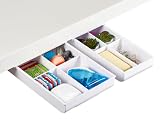
- One shallow under-desk drawer for small supplies
- A narrow vertical file holder for notebooks and folders
- A single lidded box for less attractive items
- A small tray for the objects you reach for every day
- Clear or matching drawer dividers to prevent supplies from spreading
Keep frequently used items close and move occasional supplies to a nearby cabinet, closet or rolling cart. Your desk does not need to store everything you own.
These apartment desk organization ideas offer additional ways to contain clutter without using bulky furniture.

#ad
7. Give Everyday Tech One Defined Zone
Phones, earbuds, watches and charging cables can quickly spread across a small desk. Giving these items one defined zone makes them easier to find and prevents them from taking over the workspace.
A compact charging station or folding phone stand can hold several small devices within a limited footprint. Place it near the rear corner of the desk, preferably close to your cable-management route.
If you do not need to see your phone while working, a shallow drawer may be even better. Keeping it out of sight can reduce both visual clutter and unnecessary distractions.
The important part is consistency. Put your devices in the same place each day instead of allowing them to land wherever there is an open spot.

8. Add Comfort Without Filling the Desk
A minimalist workspace should still be comfortable enough for a full workday. The trick is to choose comfort upgrades that do not consume unnecessary desktop space.
A slim task lamp adds focused lighting without the visual weight of a large decorative lamp. A supportive chair can introduce softness and texture without adding another object to the desk. If the room feels cold, place a small neutral rug or anti-fatigue mat under the workspace instead of layering more decor on the surface.
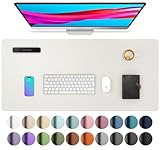
Your desk mat can also provide a softer area for your wrists while visually defining the work zone. Choose one large enough for the keyboard and mouse, but not so large that it covers nearly every inch of the desk.

#ad
9. Finish With One Intentional Personal Detail
Minimal does not have to mean impersonal.
Once the functional parts of the setup are in place, add one detail that makes the workspace feel like yours. This might be a small plant, framed photograph, ceramic catchall, candle warmer or favorite mug.
The easiest rule is to choose one focal point instead of scattering several small decorations across the desk. A single item with a little height, color or texture can make the space feel finished while leaving room to work.
If you love changing your decor seasonally, keep a small box of accessories elsewhere and rotate one piece at a time. You can refresh the look without allowing decorations to accumulate.
Three Easy Minimalist Work Desk Color Schemes
If you are unsure where to begin, use one of these simple combinations as a guide.
Warm White and Light Oak
Start with a warm-white or light-wood desk. Add a cream desk mat, white keyboard and one small natural accent. This combination feels bright and works particularly well in bedrooms and small apartment offices.
Cream, Taupe and Black
Use cream and taupe for the larger surfaces, then add black through the lamp, monitor frame or a slim file holder. The contrast makes the setup feel modern without becoming visually heavy.
Ivory, Walnut and Muted Gold
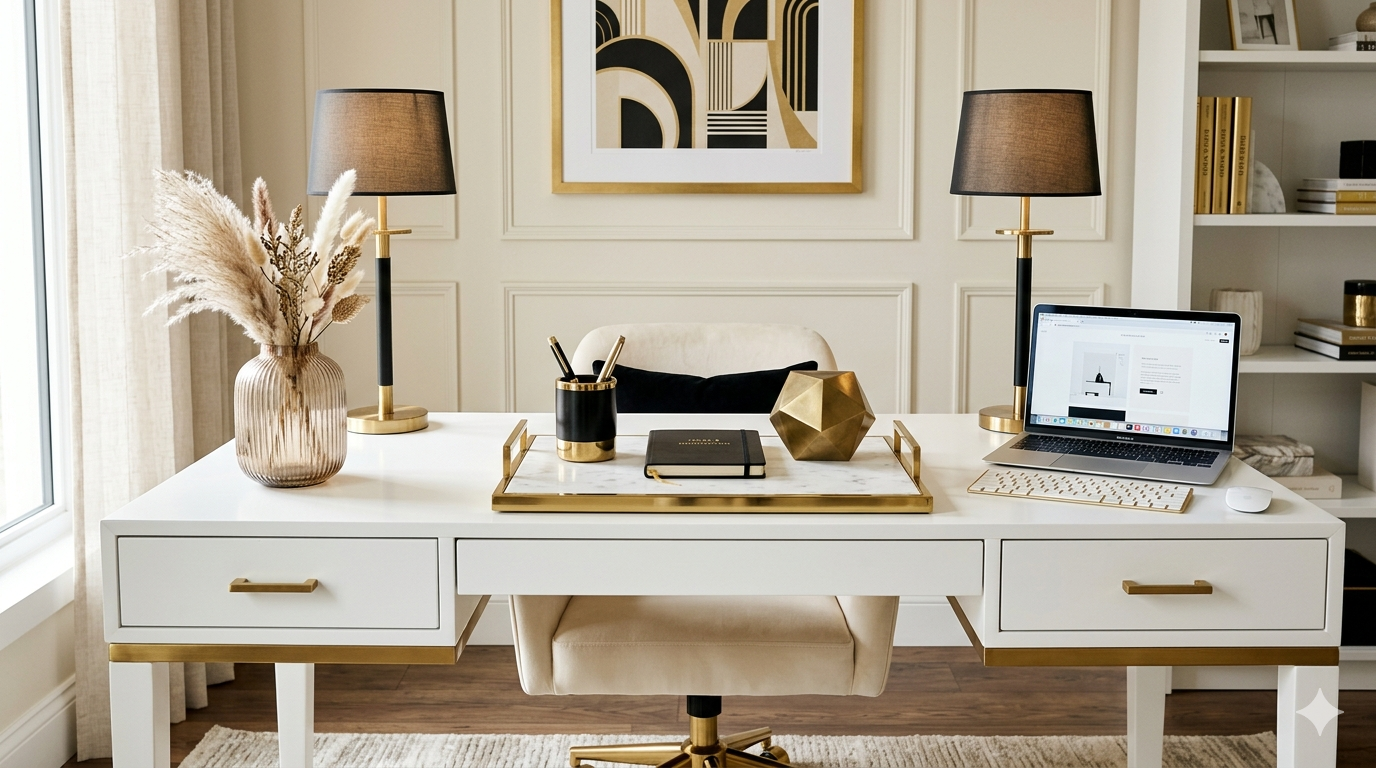
Pair a walnut desk or monitor riser with ivory accessories and one restrained brass or gold accent. This version feels slightly more polished while still maintaining a clean minimalist workspace.
A Quick Minimalist Work Desk Checklist
Before calling the setup complete, ask:
- Does everything on the desk serve a purpose?
- Is there enough clear space to work comfortably?
- Can the keyboard or laptop be stored when it is not needed?
- Are the power strip and most cables concealed?
- Do small office supplies have a defined home?
- Are the colors and finishes visually connected?
- Is there one comfortable light source?
- Can the desk be reset in less than five minutes?
If the answer is yes to most of these questions, you do not need to keep adding products. A successful minimalist office should become easier to use and maintain, not give you another space to constantly style.
Curated Collection
See The Minimalist Work Desk Edit
Compact desk, streamlined accessories, hidden-storage solutions and cable-management finds that make this look easier to recreate in a small space. Browse the complete edit and choose the pieces that solve the biggest problem in your current setup.
Shop the Full Collection →(paid link)
Frequently Asked Questions
What should be on a minimalist work desk?
A minimalist work desk should hold the equipment and supplies you use regularly, such as a computer, keyboard, mouse, task lamp and one small organizer. Less frequently used items can be stored in a drawer, cabinet or nearby cart so the desktop stays open and functional.
How do I make a small desk look less cluttered?
Start by removing anything you do not use during a normal workday. Conceal the power strip, group cords along one route, use a monitor riser to create storage underneath and give small items a specific drawer or container. A limited color palette will also reduce visual clutter.
Can a minimalist desk still feel cozy?
Yes. Warm wood, cream textiles, soft lighting and one plant or personal item can make a minimalist desk feel inviting. The goal is not to remove all decoration; it is to select a few details intentionally.
What colors are best for a minimalist office space?
Warm white, cream, taupe, soft gray, light oak and walnut are easy foundations for a minimalist office. Black or muted metal accents can add contrast. Limiting the setup to two or three connected colors is more important than choosing one specific palette.
Is a minimalist laptop setup good for a small space?
A laptop setup can be ideal for a small desk because it requires less equipment and can be packed away easily. An adjustable laptop stand, compact wireless keyboard and mouse can make it more comfortable while maintaining a streamlined appearance.
Create a Workspace That Feels Easier to Use
The most useful minimalist work desk is not necessarily the one with the fewest objects. It is the one that gives you enough room to focus, keeps everyday essentials within reach and can be returned to order without much effort.
Start with the problem that bothers you most. If cords make the desk look messy, organize those first. If the surface is crowded, add storage underneath or lift the monitor. If the setup feels mismatched, simplify the color palette before replacing everything.
A few thoughtful changes can turn even a small apartment corner into a calm, functional workspace—without making it feel empty or overly styled.
The content on this website was created with the help of AI.
Related Posts:
9 Desk Must-Haves for a Stylish Small-Space Setup
10 Best Storage Solutions for Small Home Offices (That Actually Work)
Cute Desk Organization Ideas for Apartments (That Save Space & Look Stylish)